Champagne Néret-Vély
Between farm, vineyard and cellar.
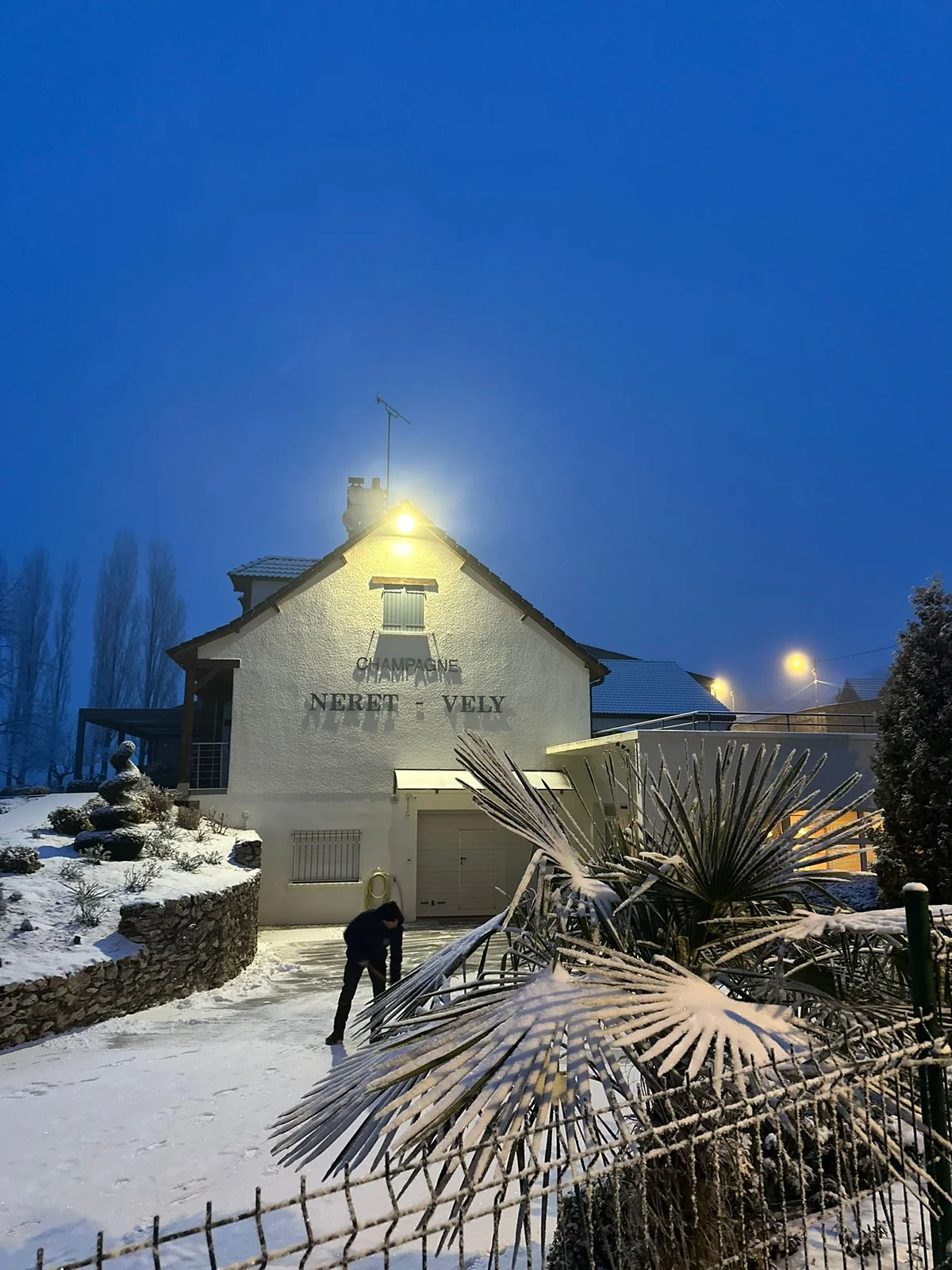
Wine-growing and farming belong together.
At Champagne Néret-Vély, wine-growing and farming have always belonged together. Since 1945, the family has seen itself not only as a Champagne producer, but deliberately also as a farm.
The cellar is in Vauchamps, close to the farm. Most of the vineyards are in Festigny, in the heart of the Vallée de la Marne. Today, Carole Néret-Marizy and Mathias Marizy are behind the work of the house.
Meunier, living soils and an open-minded cellar.
The approximately seven hectares of vineyards grow mainly on clay-rich limestone tending towards marl. These soils are particularly well suited to Meunier. At around 83%, it is the house's defining grape variety, complemented by Chardonnay, Pinot Noir and a small proportion of Pinot Gris.
Work in the vineyard is deliberately restrained. Plant protection products are used sparingly, and several parcels are worked with horses.
- Vineyard area
- 7 ha
- Main vineyards
- Festigny
- Defines the vine plantings
- 83% Meunier
- Cellar & Farm
- Vauchamps
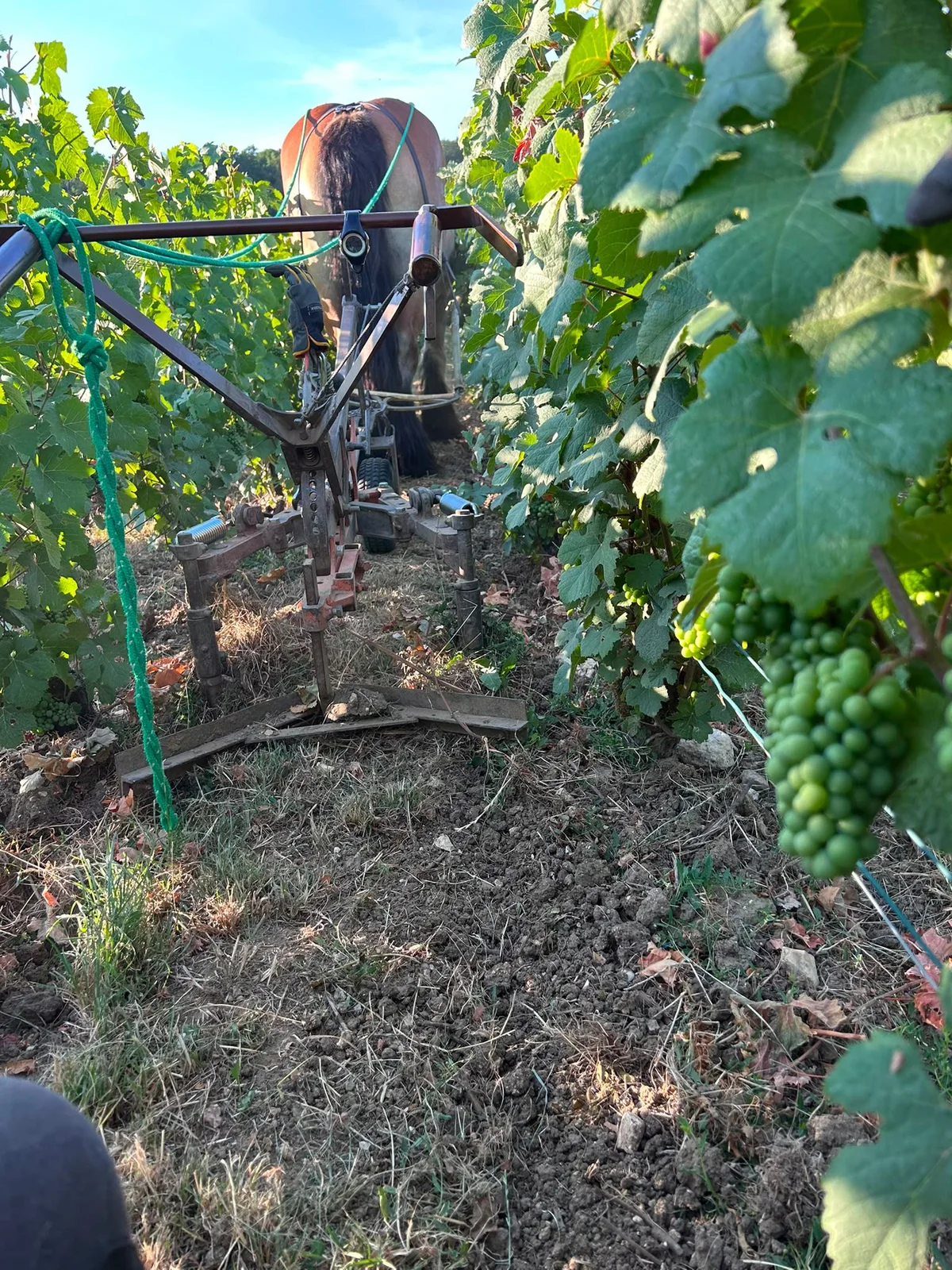
Horse work and living soils.
Some of the soil work is carried out with horses from the farm. They are led around 20 kilometres for their work in the vineyards. This allows gentler cultivation and avoids compaction by heavy machinery, placing as little strain as possible on the vines, their root zone and soil life.
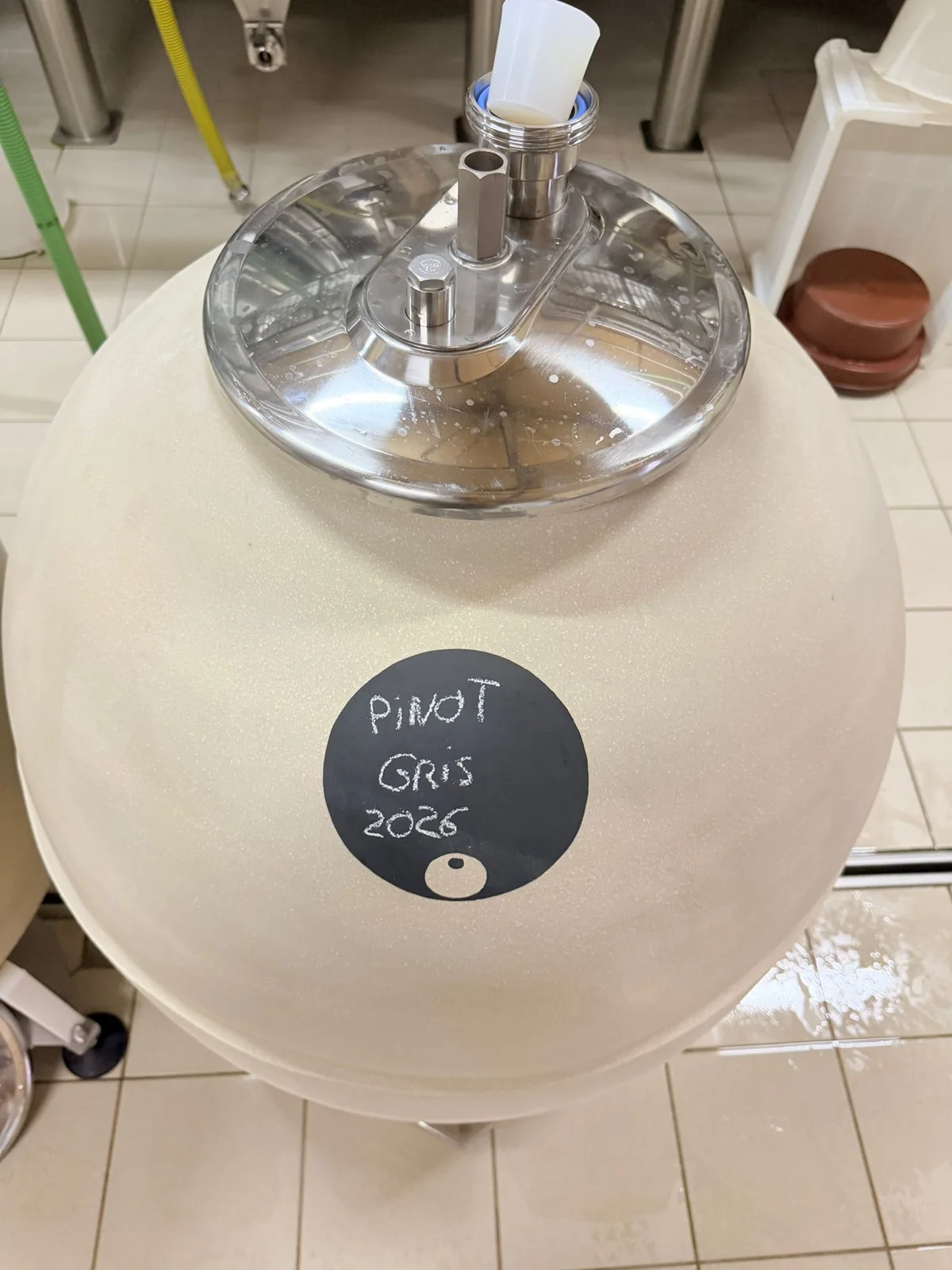
The house style, in the glass.
All processing, from pressing to vinification, takes place at the estate. Depending on the character of the wine, temperature-controlled stainless steel tanks, wooden barrels, sandstone or ceramics are used. Some reserve wines are also aged in wood.
After disgorgement, every Champagne rests for at least three to four months before leaving the estate.
Néret-Vély reveals different sides of the Vallée de la Marne. Some Champagnes are open, lively and made for convivial occasions. Others develop over a longer time and offer greater depth, structure and complexity.
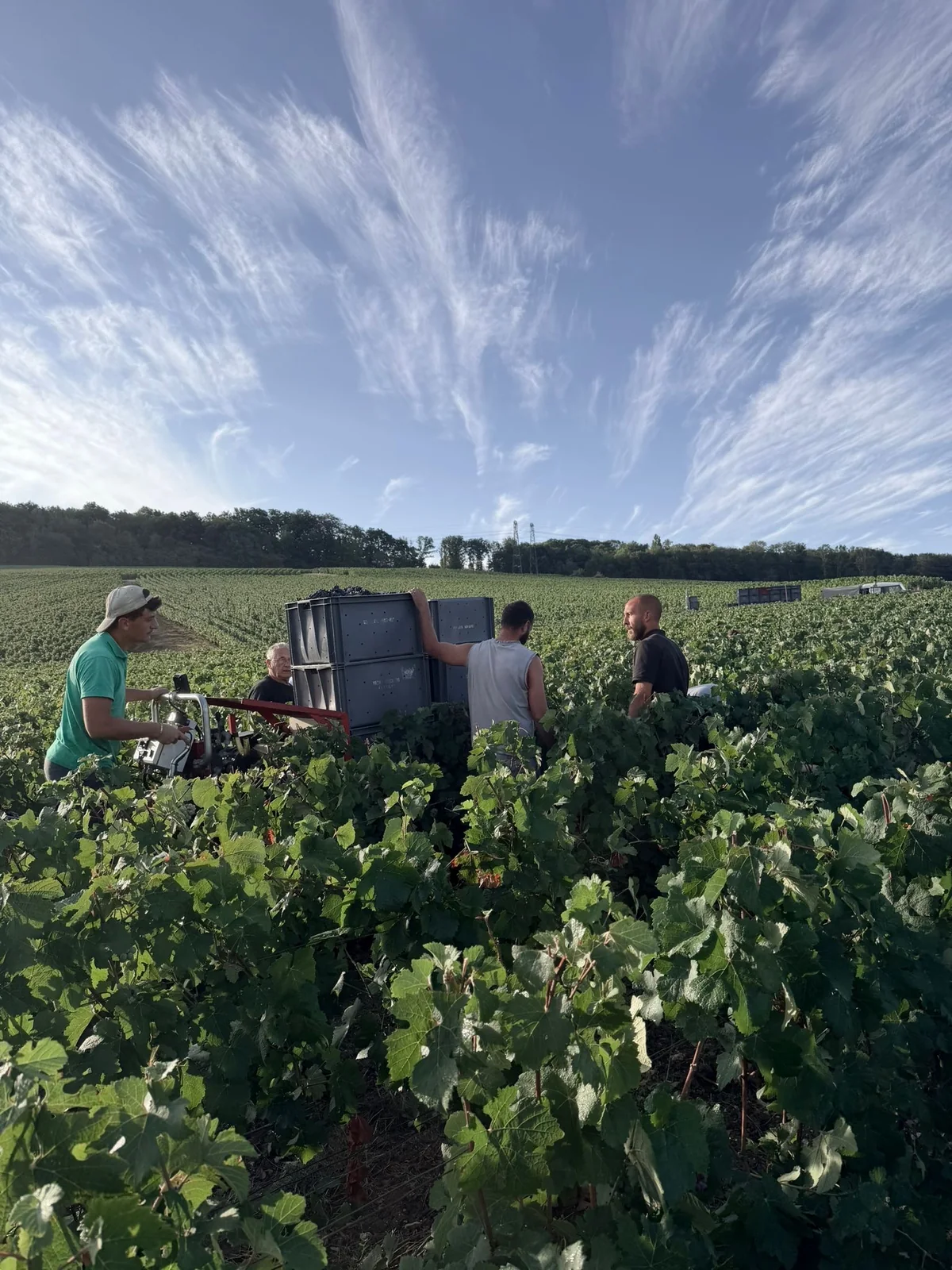
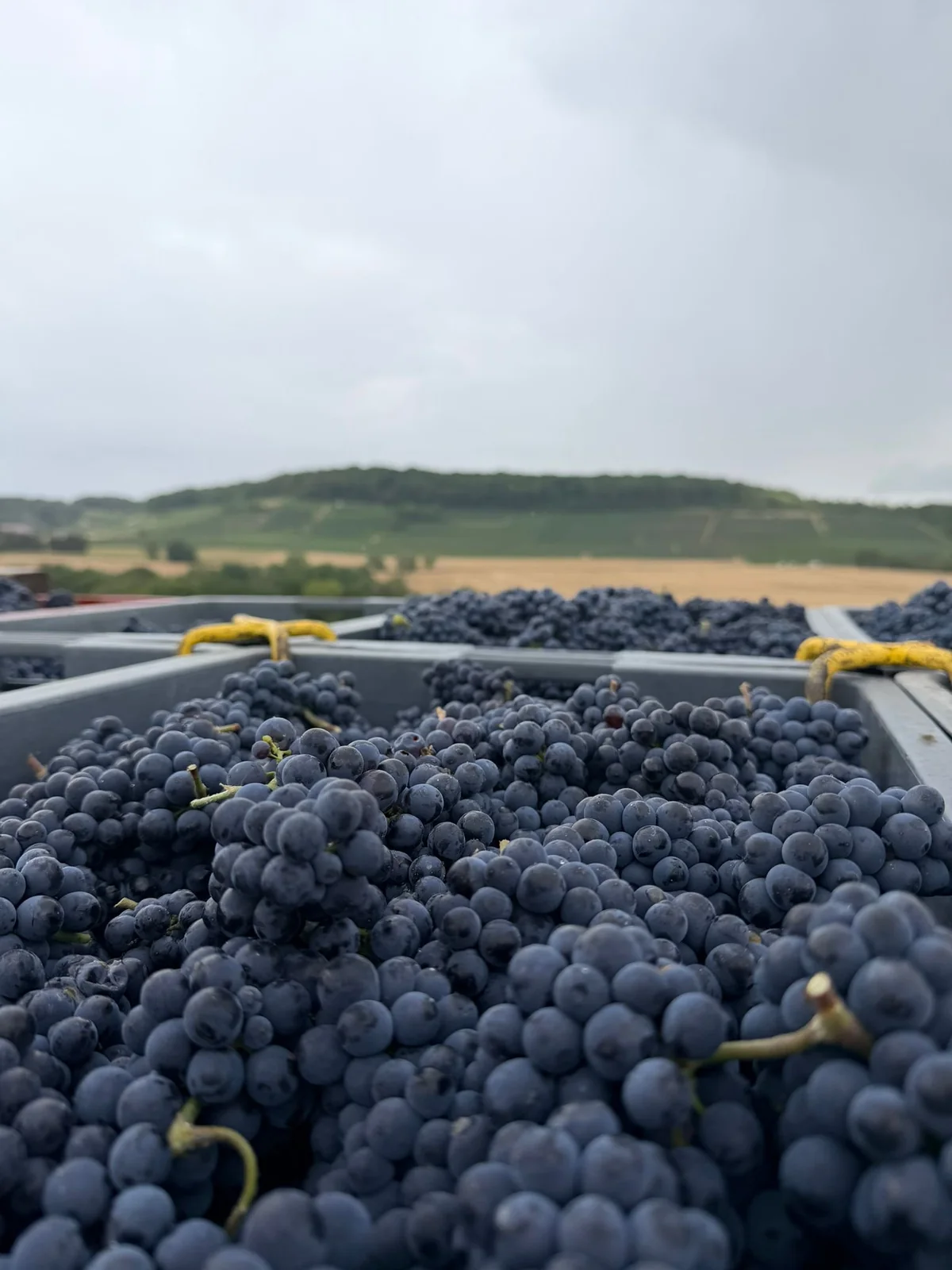
Why I chose it for Champagner Max.
What particularly convinced me at Néret-Vély was how naturally the farm, vineyard and cellar belong together. Nothing feels staged: horses in the vineyard, Meunier as the clear foundation, and a cellar where different vessels are used with purpose.
For me, this creates Champagne with an individual signature rather than a formula. These are exactly the estates I want to select and introduce through Champagner Max.